

Patterns are hard to change. Naming them helps, but it still takes effort.
The way you handle conflict. The way you connect (or don't connect) with the people you love. The way you regulate your emotions, react to stress, or view yourself.
Sometimes these patterns have roots that go back further than we realize. Our earliest relationships and experiences help shape how we show up in our marriages, families, and friendships. Even after we've worked hard to change, things left unresolved from childhood can keep poking us in ways we don't realize.
Attachment describes much of this, but what does that even mean? It's easier to feel and understand in a story from when my daughter was nine years old.
The summer of the frogs
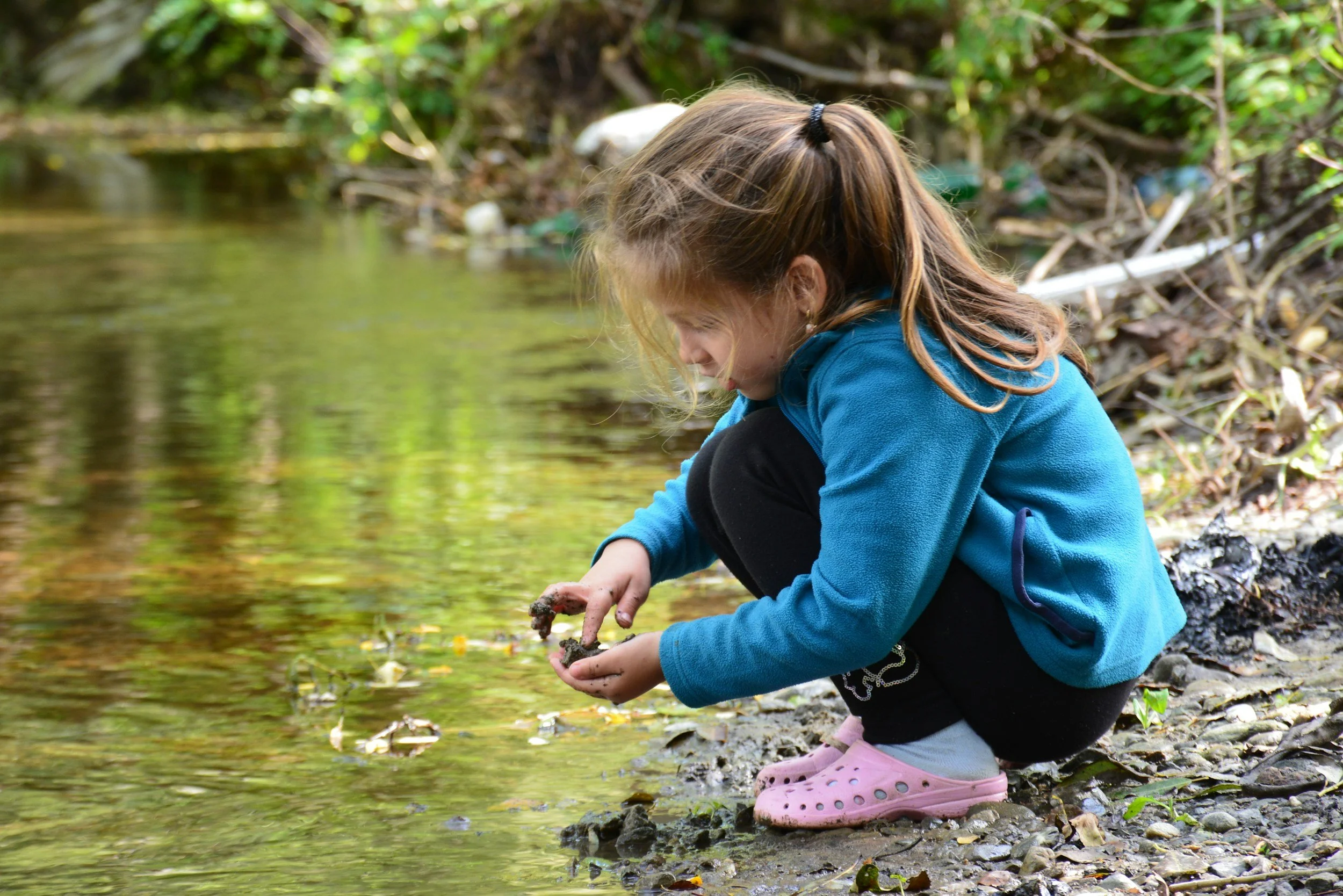
That summer she ran all over with the neighborhood kids, looking for frogs in different ponds. She felt completely safe to explore her neighborhood world with her friends, a Gizmo watch and a bike. She collected frogs (which she tried to hide in my garage as pets - that's a different story), and she collected a few bumps and bruises and figured out how to work with other kids on their frog adventures.
She could do that because she knew she had a safe place to come home to. She knew where to come for love, snacks, and Band-Aids. Her dad and I were her soft place to land during the day.
Sometimes in the middle of the day she'd come up and touch my arm. She'd get a hug, and then she'd be off again.
She didn't need a long talk. She needed to know I was still there. Once she knew, the frogs were waiting.
That touch on the arm is attachment
Attachment is our bond with the people we count on. A safe bond gives a child two things at once: somewhere to come back to, and the courage to go out, learn and try new things.
Not every child gets that. Some reach for an arm, and it isn't there, or it's there one day and gone the next. Some are afraid of touching the arms because they might get snapped at or dismissed. Children are smart, and they adapt to those situations. Some cling harder, or others say, "F-it", I'll figure it out on my own.
Either way, they walk away with answers to two questions we all need answered to figure out how we fit in the world:
Will someone be there for me?
Am I worth showing up for?
We don't outgrow our need for love
As adults, we still reach for an arm. Researchers have long argued that romantic love serves the same purpose as childhood attachment. For you, it might look like a text in the middle of the day, or catching your spouse's eye across a crowded room.
But when you aren't sure anyone will be there, then reaching out and asking for closeness feels really hard. You might send a third text when the first two go unanswered. You might hear "I'm tired" as "I'm tired of you." Or you might go quiet, say you're fine, and handle everything alone. Some of us do both.
Feeling safe with someone doesn't mean you never will get hurt or argue. It means you can come to them with the bumps and bruises and know/feel that you matter.
What if you didn't have a soft place to land?
Build one! Childhood matters, but it doesn't decide everything. In one study that followed people for 23 years, those who started out insecure as babies and were secure as adults went on to have good, close relationships.
Trying harder isn't enough. You can know exactly why you shut down and still shut down. What helps is reaching for a safe person, again and again, and finding they're still there. That person might be a spouse, a friend, or a therapist.
Start by noticing. The next time your reaction feels disproportionate to the moment, ask yourself:
What am I afraid is about to happen?
Where do I feel this in my body?
When have I felt that sensation before? (Think childhood.)
What do I need that I'm not asking for?
This isn't about blaming your parents. Most people are genuinely doing the best they can with what they've been given. Parents doing their best, and you not getting everything you need, can be true in the same place.
All of us need somewhere to touch base before we head back out. Who's yours?
Sources
Fraley, R. C. Adult Attachment Theory and Research, University of Illinois
Hazan, C., & Shaver, P. (1987). Romantic love conceptualized as an attachment process. Journal of Personality and Social Psychology, 52(3), 511-524
Roisman, G. I., Padrón, E., Sroufe, L. A., & Egeland, B. (2002). Earned-secure attachment status in retrospect and prospect. Child Development, 73(4), 1204-1219